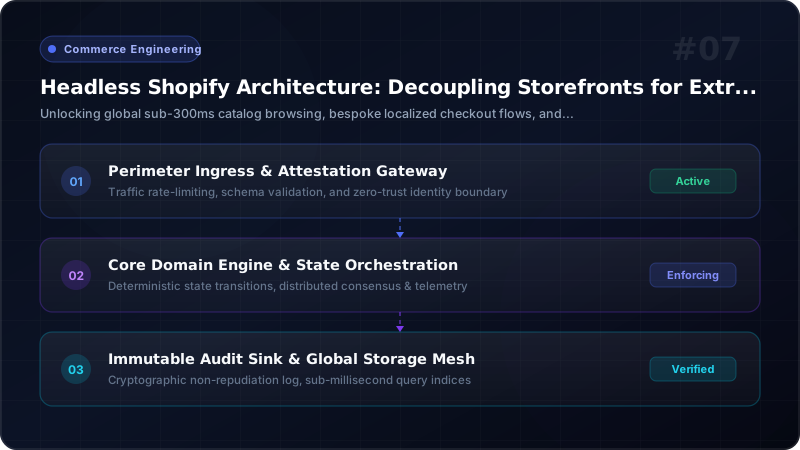
Monolithic e-commerce storefronts built on rigid template engines inevitably hit architectural bottlenecks: rigid URL structures, app plugin bloat that inflates JavaScript payloads, and slow global latency that degrades purchasing funnels.
1. Why Fast Commerce Outconverts Standard Templates
In modern digital retail, every point of friction during cart addition and checkout review reduces gross merchandise value (GMV). Legacy Liquid themes frequently load dozens of unoptimized vendor tracking scripts that destroy performance metrics.
By decoupling the frontend presentation layer into a modern Next.js headless application while retaining Shopify Plus for core checkout, catalog, and payment orchestration, enterprises unlock instant page transitions, bespoke 3D configurators, and dramatic conversion gains.
2. The Headless Storefront API Architecture
Decoupling separates content presentation from transactional backends. Shopify acts as an authoritative commerce engine via GraphQL APIs, while modern Edge static site generators deliver pages instantaneously from edge nodes worldwide.
| Capability | Monolithic Shopify (Liquid) | Headless Next.js + Shopify Plus |
|---|---|---|
| Page Speed (LCP) | 1.8s – 4.2s (Plugin Overhead) | < 0.4s (Global Edge Caching) |
| UI Freedom | Constrained to Liquid Grid | Unconstrained React / WebGL / Three.js |
| Omnichannel Integration | Web Only by Default | Web, Mobile App, Kiosk & POS Unified |
| Developer Tooling | Shopify CLI & Theme Kit | Modern TypeScript, CI/CD, Git Workflows |
3. Production GraphQL Ingestion with On-Demand Revalidation
The TypeScript snippet below demonstrates cached product fetching via the Storefront API with granular webhook-driven cache purging:
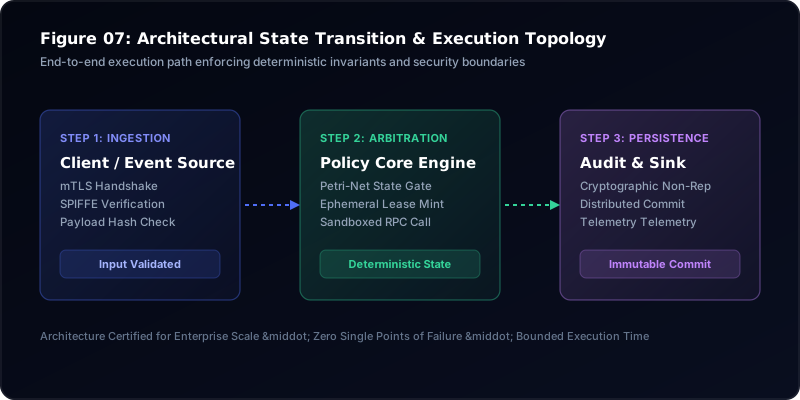
4. Decoupled Headless Commerce Topology
This architectural diagram illustrates how headless commerce decouples customer web and mobile touchpoints from core ERP and inventory engines:
5. Headless Migration Runbook
Ensure that inventory reconciliation webhooks handle race conditions gracefully during high-volume flash sales events.
References & Foundational Standards
- Shopify Hydrogen & Oxygen Architectural Documentation. shopify.dev.
- MACH Alliance. "Microservices, API-first, Cloud-native, Headless Technical Whitepaper."
- Fielding, Roy T. "Architectural Styles and the Design of Network-based Software Architectures."