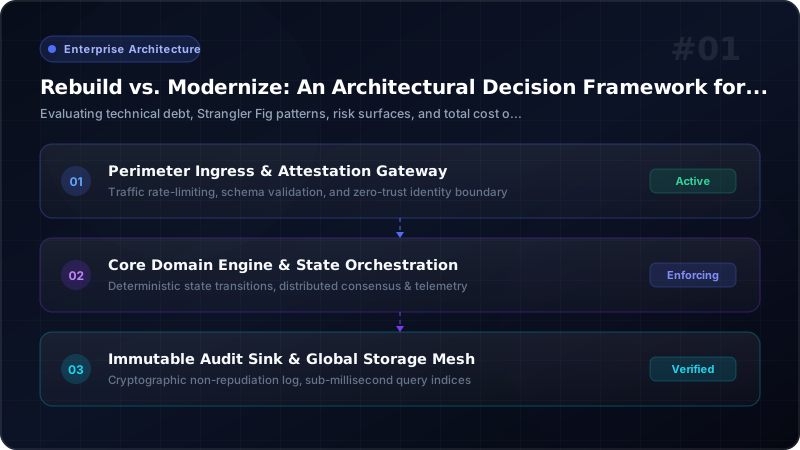
Rebuild vs. Modernize: An Architectural Decision Framework for Legacy Enterprise Systems
Evaluating technical debt, Strangler Fig patterns, risk surfaces, and total cost of replacement for mission-critical core systems.
Architectural blueprints, production incident retrospectives, and frontier technology analysis authored by our principal engineers and architects.
Evaluating technical debt, Strangler Fig patterns, risk surfaces, and total cost of replacement for mission-critical core systems.
Evaluating technical debt, Strangler Fig patterns, risk surfaces, and total cost of replacement for mission-critical core systems.
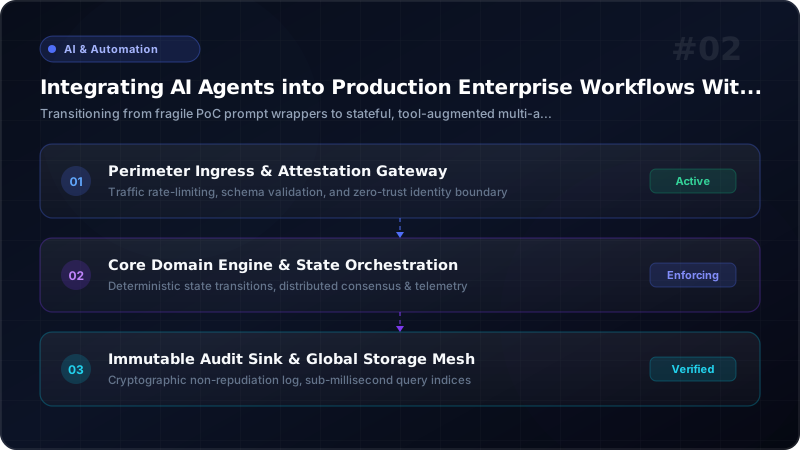
Transitioning from fragile PoC prompt wrappers to stateful, tool-augmented multi-agent systems bounded by formal Petri-net guardrails.
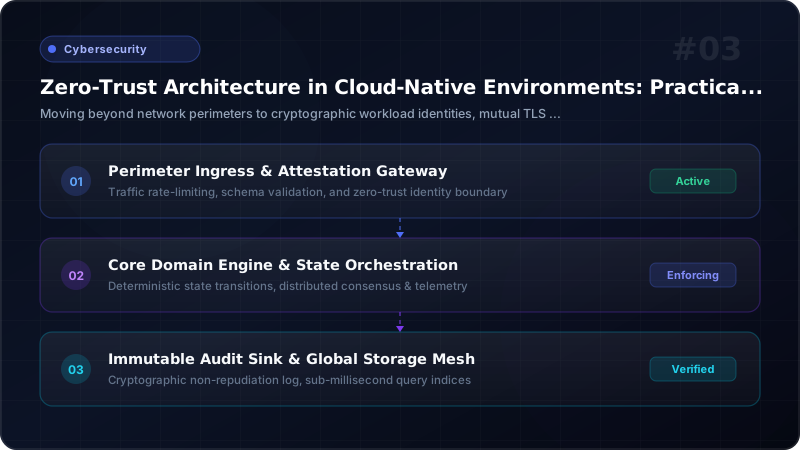
Moving beyond network perimeters to cryptographic workload identities, mutual TLS service meshes, and ephemeral credential rotation.
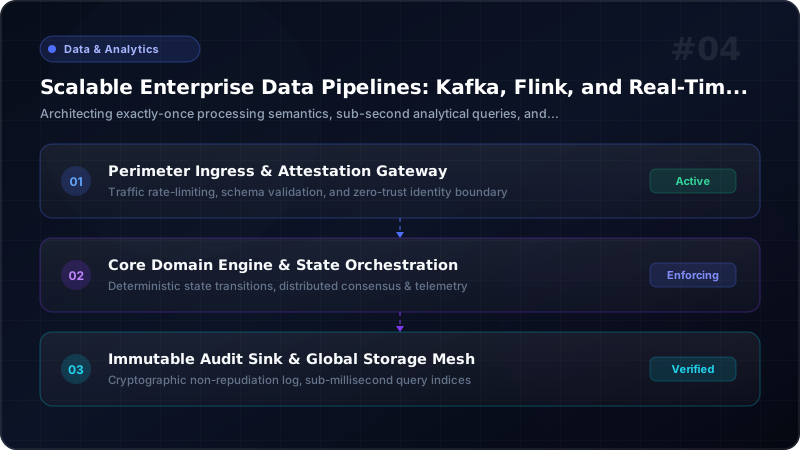
Architecting exactly-once processing semantics, sub-second analytical queries, and schema governance at 100,000 events per second.
Leveraging Edge computing, stale-while-revalidate caching topologies, streaming SSR, and asset optimization for instantaneous page delivery.
Performance benchmarks, native bridge overhead, graphics engine fidelity, and talent velocity compared for enterprise mobile engineering.
Unlocking global sub-300ms catalog browsing, bespoke localized checkout flows, and automated ERP inventory synchronization.
A quantitative decision model weighing Microsoft ecosystem integration against proprietary domain logic and licensing overhead.
Human factors engineering principles for dense industrial, trading, and observability interfaces that prevent critical decision fatigue.
Analyzing ramp-up friction, knowledge retention, architectural ownership, and output metrics across external engineering engagement models.
Structuring hierarchical planner-worker topologies, semantic message buses, and deterministic rollbacks when autonomous models disagree.
Ensuring automated sub-60s active-active cluster failover across continents without split-brain anomalies or duplicate writes.
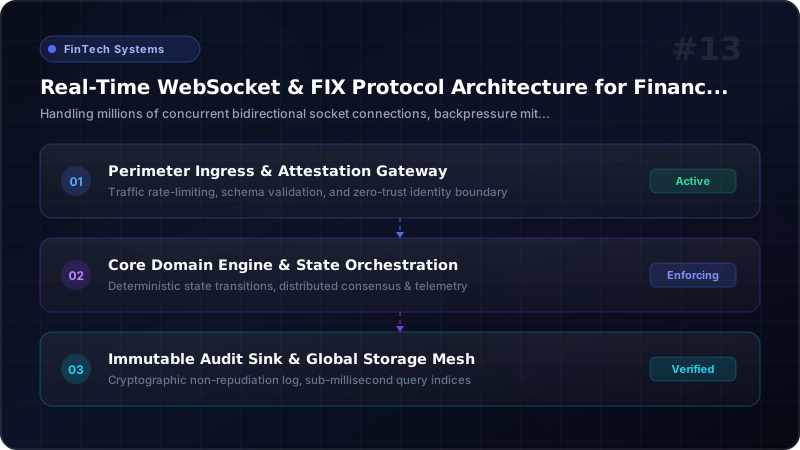
Handling millions of concurrent bidirectional socket connections, backpressure mitigation, and microsecond order execution pipelines.
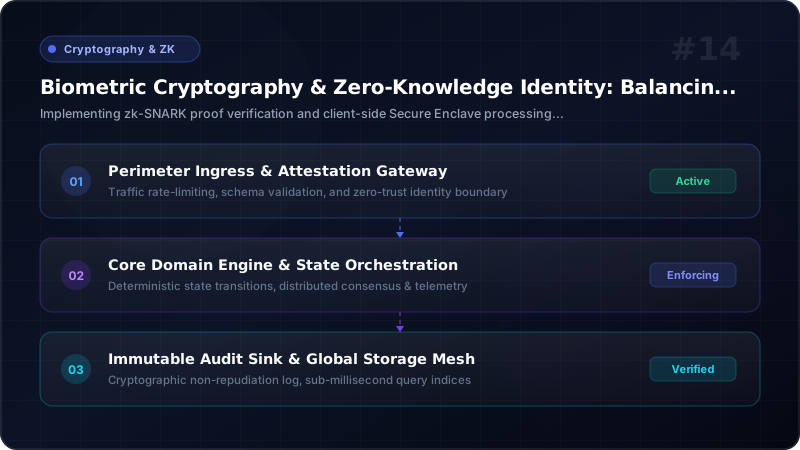
Implementing zk-SNARK proof verification and client-side Secure Enclave processing for tamper-proof sovereign authentication.
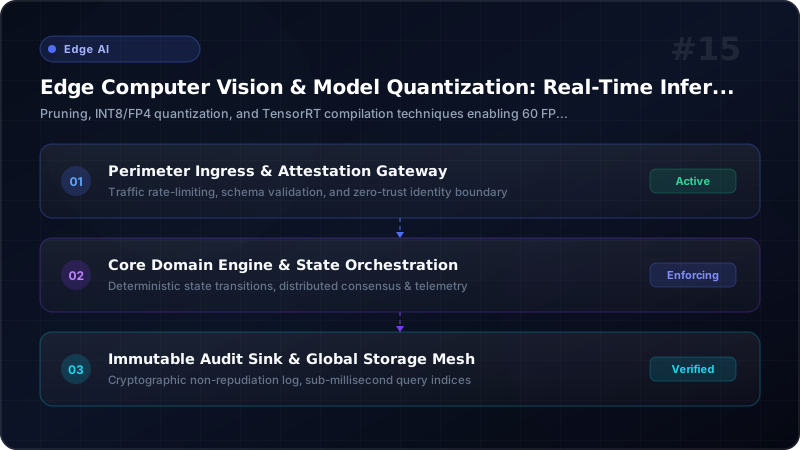
Pruning, INT8/FP4 quantization, and TensorRT compilation techniques enabling 60 FPS vision models on edge gateways and drones.
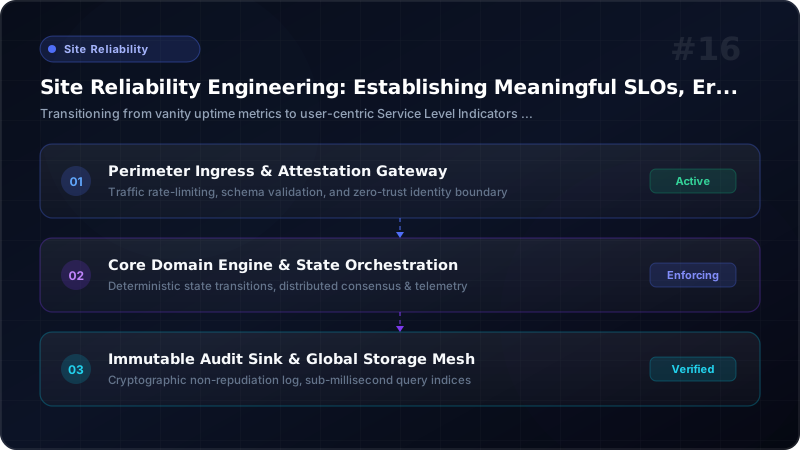
Transitioning from vanity uptime metrics to user-centric Service Level Indicators that govern release velocity and technical debt paydown.
Demystifying chain-of-thought scaling, test-time compute search trees, and selecting between fast direct generation versus reasoning tokens.
A rigorous technical evaluation of reinforcement learning without supervised warmups, private cluster deployments, and token economics.
Embedding sandboxed AI coding agents into continuous integration pipelines to enforce architectural boundaries and auto-fix security regressions.
Technical readiness for prohibited systems, high-risk classification criteria, training data provenance, and automated conformity audits.