Scaling engineering capacity quickly without sacrificing architectural discipline is one of the perennial challenges of hyper-growth technology companies. Traditional hourly contractor staffing frequently introduces code fragmentation, knowledge silos, and misaligned delivery incentives.
1. The Hidden Costs of Fragmented Staff Augmentation
Adding individual external software engineers into an already strained internal team often consumes more senior management bandwidth than it delivers in net productivity. Internal architects spend half their week reviewing code and onboarding temporary contributors.
By shifting from fragmented individual staff augmentation to autonomous, cross-functional Dedicated Engineering Squads (combining lead architects, senior engineers, QA automation, and product specialists), enterprises accelerate delivery velocity while preserving institutional technical debt standards.
2. Autonomous Dedicated Engineering Squads
A dedicated squad arrives as an integrated product delivery vehicle equipped with established code review protocols, shared linters, automated CI/CD practices, and a dedicated Technical Lead who interfaces directly with your executive product leadership.
| Engagement Model | Individual Staff Augmentation | Dedicated Engineering Squad | Traditional Outsourcing (Fixed Bid) |
|---|---|---|---|
| Ramp-Up Duration | 6 – 12 Weeks (Heavy Internal Burden) | 1 – 2 Weeks (Cohesive Pre-Trained Unit) | 4 – 8 Weeks |
| Architectural Ownership | Individual Contributor Only | Full End-to-End Accountability | None (Milestone Delivery Focus) |
| Knowledge Retention | Lost when Contractor Departs | Preserved in Squad Runbooks & Culture | Low (Handoff Risk) |
| Delivery Velocity (DORA) | Moderate / Highly Variable | Elite (Continuous Production Deployments) | Slow / Batch Oriented |
3. Quantitative Delivery Measurement via DORA Metrics
The TypeScript interface below illustrates how Bitneka tracks continuous deployment health and code quality metrics across all deployed squads:
4. Dedicated Squad Alignment Model
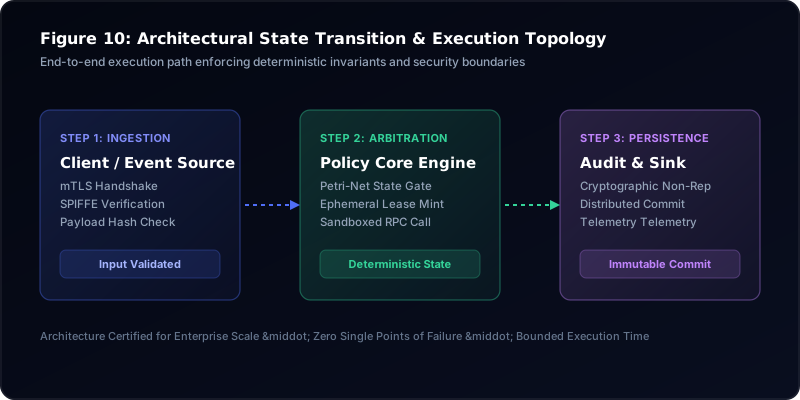
This diagram illustrates the interface boundaries between client executive stakeholders and the autonomous cross-functional engineering squad:
5. Engagement Selection Checklist
Choose individual augmentation only for temporary skill spikes; adopt dedicated squads for strategic product builds that demand long-term architectural stewardship.
References & Foundational Standards
- DeMarco, Tom & Lister, Tim. "Peopleware: Productive Projects and Teams." Dorset House.
- Forsgren, Nicole, Humble, Jez & Kim, Gene. "Accelerate: The Science of Lean Software and DevOps."
- Project Management Institute (PMI). "Agile Practice Guide."