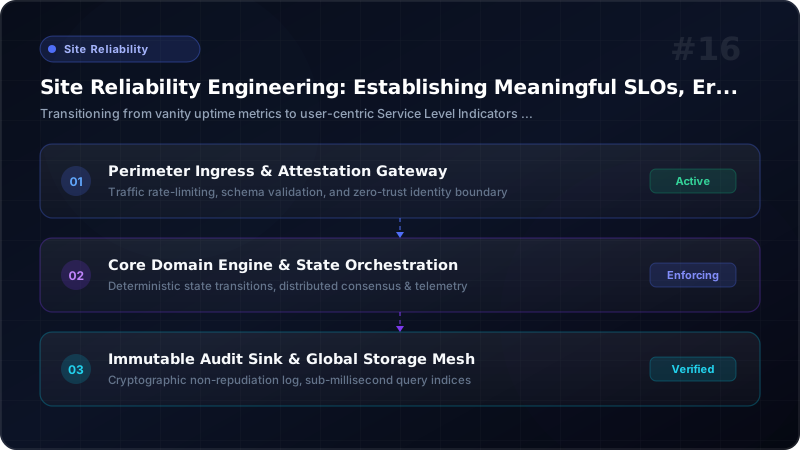
Traditional IT uptime metrics—such as '99.9% ping availability' measured from internal bastion servers—are useless if actual end users are experiencing broken checkout buttons, 8-second page loads, or silent API authentication failures.
1. Why Vanity Uptime Metrics Deceive Executive Leadership
An infrastructure dashboard displaying 100% green servers often hides a catastrophic reality: if edge load balancers are rejecting traffic due to TLS certificate expiration, the servers remain 'idle and healthy' while the business bleeds revenue.
Modern Site Reliability Engineering (SRE) balances product feature velocity against infrastructure stability through quantifiable Service Level Indicators (SLIs), Service Level Objectives (SLOs), and shared Error Budgets that dictate whether teams can deploy new code or must halt releases to address tech debt.
2. Defining User-Centric SLIs and SLOs
An SLI must directly reflect user happiness. For an API, this is the percentage of valid requests completed in under 250 milliseconds with HTTP 200 status codes over a rolling 30-day window.
| Availability Tier | Allowable Downtime (30 Days) | Engineering Trade-off / Architecture Cost |
|---|---|---|
| 99.0% (Two Nines) | 7 Hours, 12 Minutes | Single Server / Monolith / Low Cost |
| 99.9% (Three Nines) | 43 Minutes, 12 Seconds | Multi-AZ Cloud / Automated Rolling Restarts |
| 99.99% (Four Nines) | 4 Minutes, 19 Seconds | Multi-Region Active-Active / Automated Failover |
| 99.999% (Five Nines) | 25.9 Seconds | Specialized Telco Hardware / Sub-Second Quorums |
3. Multi-Window Multi-Burn-Rate Alerting Prometheus Rule
The Prometheus alert configuration below implements Google SRE's multi-window burn rate algorithm to trigger pages only when error budgets face rapid depletion:
4. SRE Error Budget Governance Flow
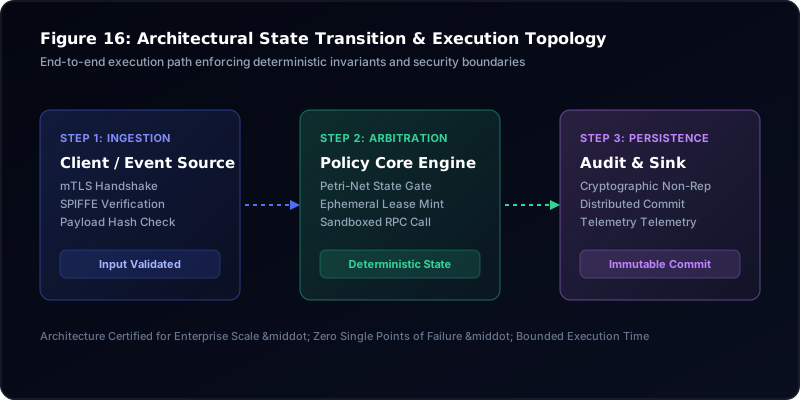
This diagram illustrates the automated feedback loop where error budget health governs CI/CD deployment pipelines and engineering sprint allocations:
5. Blameless Post-Mortem Guidelines
View production outages as systemic testing failures rather than individual human error. Post-mortems must focus on timeline reconstruction, root cause analysis, and preventative guardrails.
References & Foundational Standards
- Beyer, Betsy et al. "Site Reliability Engineering: How Google Runs Production Systems." O'Reilly Media.
- Google Cloud Architecture Center. "The SRE Book: Service Level Objectives and Error Budgets."
- OpenTelemetry Project. "Distributed Tracing and Metric Telemetry Specification." CNCF.