Enterprise resource planning (ERP) systems represent the foundational central nervous system of large organizations. Engineering leadership routinely faces a high-stakes fork in the road: adopt a commercial off-the-shelf platform like Microsoft Dynamics 365 or build a custom distributed ERP stack from scratch.
1. The Enterprise ERP Dilemma: Off-the-Shelf vs. In-House
Building a custom ERP from scratch requires re-implementing standard ledger accounting, double-entry reconciliation, tax reporting across dozens of jurisdictions, and complex payroll logic that adds zero differentiated customer value.
While Dynamics 365 delivers out-of-the-box regulatory compliance, finance, and supply chain maturity, custom-built solutions offer total domain specialization and zero ongoing per-seat licensing fees. Increasingly, top enterprises adopt a hybrid two-tier ERP federation model.
2. The Two-Tier Hybrid Federation Model
The most effective modern architecture utilizes Dynamics 365 for core corporate finance, general ledger, and human capital governance, while exposing event-driven microservices for proprietary manufacturing, logistics, or trading operations.
| Dimension | Microsoft Dynamics 365 | Custom Distributed ERP | Two-Tier Hybrid Federation |
|---|---|---|---|
| Initial Implementation Time | 6 – 12 Months | 18 – 36 Months | 3 – 6 Months per Tier |
| Ongoing Licensing Cost | High (Per-Seat / Month) | Zero (Infrastructure Only) | Optimized (Fewer Core Seats) |
| Domain Agility | Constrained by Microsoft Models | 100% Tailored to Unique IP | High Agility in Edge Layer |
| Regulatory / Tax Compliance | Automated Global Updates | Manual Engineering Burden | Handled by Dynamics 365 Core |
3. Production Azure Event Synchronization Blueprint
The C# Azure Function below illustrates how enterprise teams synchronize Microsoft Dataverse business transactions into custom operational datastores asynchronously:
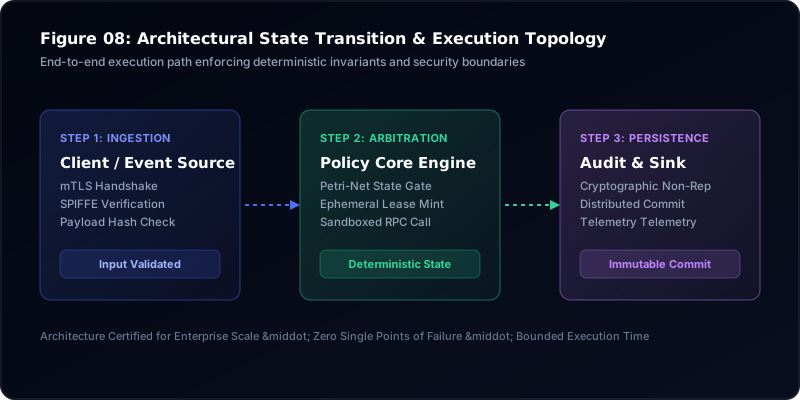
4. Hybrid Two-Tier ERP Federation Topology
This architectural diagram illustrates how the hybrid two-tier model bridges Microsoft Dynamics 365 with high-speed microservices via Azure Service Bus:
5. ERP Evaluation Framework
Quantify full 5-year total cost of ownership (TCO) including maintenance staffing, licensing tier increases, and custom integration overhead before committing to a platform.
References & Foundational Standards
- Microsoft Dynamics 365 Architectural Implementation Guide (Success by Design).
- Gartner Research. "Pace-Layered Application Strategy for Enterprise Business Systems."
- The Open Group. "TOGAF Standard, 10th Edition: Enterprise Architecture Methodology."